


Search
Categories
- All
- Anesthesiology
- Breast Surgery
- Cancer Center
- Dermatology
- Ears, Nose, and Throat
- Emergency Room
- Endocrinology
- Family Medicine
- Fertility Clinic
- Gastroenterology
- General Surgery
- Gynecology
- Internal Medicine
- Laboratory
- Medical Imaging
- Nuclear Medicine
- Nutrition
- Obstetrics
- Ophthalmology
- Stomatology
- Orthopedics and Sports Medicine/Rehabilitation
- Pediatrics
- Pharmacy
- Psychology
- Respiratory Medicine
- Surgery
- Vasculocardiology
- PCR test (incl. bilingual report service fee)

How to use Accuhaler
LEARN MOREStep 1: Open
• Hold your Accuhaler in one hand with the dose-counter window facing upwards and place the thumb of your other hand on the thumb grip.
• Open your Accuhaler by pushing the thumb grip right around until it clicks.
Step 2: Prepare Medication
• Hold your Accuhaler level with the mouthpiece towards you.
• Use your thumb to push the lever away from you until you hear it clicks
Step 3: Breathe out then inhale
• Breathe out as much as possible. Avoid exhaling into your Accuhaler
• Put the mouthpiece between your teeth and use your lips to seal the mouthpiece
• Breathe in steadily with your mouth through your Accuhaler (not through your nose)
• Remove your Accuhaler and hold your breath for about 10 seconds
• Breathe out slowly
Step 4: Close
• Close your Accuhaler by sliding the thumb grip back to the original position until it clicks
• Rinse your mouth with water and spit out after using your Accuhaler.
• The dose counter on the top of the Accuhaler shows how many doses are left to use. Numbers 5 to 0 will appear in RED, that means you need to get another Accuhaler from doctor.
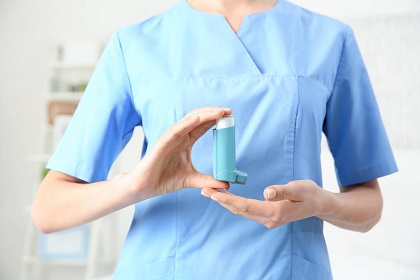
How to Use a Metered-Dose Inhaler and a Spacer
LEARN MOREWHAT YOU NEED TO KNOW:
What is a metered-dose inhaler and a spacer?
A metered-dose inhaler is a handheld device that gives you a dose of medicine as a mist. You breathe the medicine deep into your lungs to open your airways. A spacer is a tube that attaches to the mouthpiece of your metered-dose inhaler. The spacer helps make your inhaler easier to use. It also helps get the medicine into your lungs better. Your medicine stays in the spacer for a short amount of time. This allows you to breathe one deep breath. You can also breathe in and out at a normal rate up to 5 times. Your healthcare provider will teach you how to use your inhaler and spacer.
How do I use my inhaler with a spacer?
Practice using your inhaler and spacer. Your medicine will work best if you use them correctly. The steps below will help you use your inhaler and spacer correctly:
• Prepare your inhaler and spacer:
○ Remove the caps from your inhaler and spacer. Check to make sure there is nothing in the mouthpiece that could block the medicine from coming out.
○ Put the spacer onto the inhaler.
○ Shake the inhaler to mix the medicine.
○ Hold the inhaler upright, with the mouthpiece of the spacer pointing towards your mouth.
• Get ready to breathe in the medicine:
○ Keep your mouth away from the mouthpiece, and breathe out fully to clear your lungs.
○ Place the mouthpiece between your lips. Close your lips around the mouthpiece to form a seal and prevent a medicine leak. If you cannot put your mouth around the mouthpiece, your healthcare provider will give you a spacer with a mask attached. Hold the mask firmly to your face.
○ Press down the canister and breathe in slowly. This helps the medicine get into your lungs. Make sure to breathe in within 2 seconds of pressing down the canister.
○ Hold your breath for at least 5 seconds. This will help the medicine reach all parts of your lungs, including the smaller parts called the alveoli.
○ Breathe out slowly through pursed lips. This helps to keep your airway open and allows the medicine to be absorbed into more areas.
○ Repeat puffs of medicine as directed by your healthcare provider. Wait about 2 minutes between puffs. If you need to use a bronchodilator and a steroid inhaler, use the bronchodilator first. Wait 5 minutes then use the steroid inhaler.
○ Gargle with warm water to remove any leftover medicine from your mouth and throat.
How do I care for my inhaler and spacer?
Pull your inhaler and mouthpiece apart. Put the caps back on both. Clean your spacer and inhaler at least weekly. Remove the canister from your inhaler before cleaning. Wash your spacer and inhaler with warm soapy water. Rinse and allow to air dry. Make sure both are completely dry before using.
When should I seek immediate care?
• Your lips or nails turn blue or gray.
• The skin between your ribs or around your neck pulls in with every breath.
• You feel short of breath, even after you use your inhaler.
When should I contact my healthcare provider?
• You have to take more puffs from the inhaler than directed, in order to get relief.
• You run out of medicine before your next refill is due.
• You feel like your medicine is not making your symptoms better.
• You have questions or concerns about your condition or care.
CARE AGREEMENT:
You have the right to help plan your care. Learn about your health condition and how it may be treated. Discuss treatment options with your caregivers to decide what care you want to receive. You always have the right to refuse treatment.
© 2017 Truven Health Analytics LLC All illustrations and images included in CareNotes® are the
copyrighted property of A.D.A.M., Inc. or Truven Health Analytics.
Click the link for more information on Emergency Medicine Clinical Service
Click the link for more information on Family Medicine Clinical Service
Click the link for more information on Respiratory Medicine Clinical Service
Pulmonary Function Tests
LEARN MORE
What are pulmonary function tests?Diagnosis and assessment of lung function is one of the three major types of diagnosis for respiratory disease. Pulmonary function can be used for the early diagnosis of respiratory system diseases, identifying the causes of breathing difficulties, assessing the severity of a patient's condition, evaluating the efficacy of medicine and other treatments, assessing the degree of risk of thoracic and abdominal surgery, assessment of occupational pneumoconiosis, and monitoring of critical illnesses.
Pulmonary function tests are a kind of physical examination which are painless and do not cause any harm to the body. They are highly sensitive, can be performed many times, and patients readily accept such tests. Unlike chest X-rays and CT scans, pulmonary function tests focus on gaining information about changes in lung function. They are also more sensitive in measuring lung function to diagnose some diseases of the airways.
Which tests are included in pulmonary function tests?
Pulmonary function tests include spirometry and diffusion capacity. Spirometry mainly assess whether airflow of the trachea, bronchi, and smaller airways is affected by abnormal or obstructive lesions when a patient is in normal health or sick.
Diffusion capacity assesses the size of the lungs compared with the degree of carbon monoxide gas dispersion. This indirectly allows us to understand more about the ability of the lungs to supply oxygen and eliminate carbon dioxide from the tissue and organs as well as the function of the alveoli in the distal airways.
In addition, lung function tests also include an airway provocation test and bronchial dilation test, to assess the response to inhaling irritants or bronchial smooth muscle relaxants. This determines whether a patient has asthma, or whether smokers have chronic obstructive pulmonary disease.
Who should have pulmonary function tests?
• Patients with chronic coughing and phlegm
• Patients with chest tightness and shortness of breath after activity
• Patients with chest tightness and shortness of breath
• Patients with chronic obstructive pulmonary disease
• Patients with bronchial asthma or suspected bronchial asthma
• Patients with interstitial lung disease
• Patients who plan to have thoracic or abdominal surgery
• Long-term smokers (regular pulmonary tests required)
• People with long-term exposure to dust or chemicals at work
What should I know before having pulmonary function tests done?
Listening carefully to instructions from medical staff is crucial during pulmonary function tests. The following steps will be helpful in allowing you to understand the test methods used, know how to cooperate with the physician, and to get reliable results:
• Avoid smoking, drinking alcohol, intense exercise, overeating, and wearing tight clothing before pulmonary function testing
• Practice breathing in through your mouth, then quickly and forcefully breathing out for 5-6 seconds, as if you were blowing up a balloon
• Stop using bronchodilators according to physician's orders. e.g. Theophyline, β2-adrenergic agonists, steroid, and anti-allergens. If uncertain, be sure to check with your physician
• Before testing starts, the operators will carefully explain the pulmonary testing methods to the patient, the steps involved, and matters needing attention. Ask questions if you are unsure of anything
• Personal factors can have a big influence on the results of pulmonary function tests, and the patient should stay as relaxed as possible, listen carefully to the instructions from medical staff, and fully cooperate. This is important for achieving accurate test data. If you experience any discomfort during the testing process, let the medical staff know as soon as possible to avoid any problems
• You may eat breakfast as normal on the morning of testing
Which kinds of people should not have pulmonary testing done?
• People with massive hemoptysis, pneumothorax, giant bullae of the lungs, or unstable heart function within the past week
• People who are sensitive to bronchodilators
• People with edema of the throat or vocal cords, or moderate to severe respiratory abnormalities should not undertake bronchial provocation tests
• Your physician will choose the appropriate testing method based on your specific circumstances
What can I do to protect my lungs?
• Quit smoking and reducing inhalation of dust, smoke, or occupational dust or chemicals, and reducing indoor and outdoor pollution, are effective measures which can be taken to protect lung function. In particular, quitting smoking is currently the most effective and economic way of reducing the risk of getting chronic obstructive pulmonary disease (COPD) and delaying its development
• Increasing exercise and physique:
○ Healthy people can choose intense exercise, such as running or swimming, however people with COPD cannot do intense exercise, and should opt for less intense exercise, such as walking, jogging, climbing stairs, a treadmill, sweeping, or gardening
○ Exercise should be done step by step, 4-5 times a day, for 10 minutes each time. Once you get used to this pattern, increase the time to 20-30 minutes each session for 3-4 times a day. Walking in a flat area for 12 minutes for some basic exercise. This will test your health and fitness level
○ Individuals with severe COPD should do breathing exercises. Abdominal breathing, breathing with pressed lips, and qigong breathing exercises can increase the efficiency of breathing. Use public exercise equipment in your community for relaxed exercising
Reference
中华医学会呼吸病学分会肺功能专业组:肺功能检查指南
Click the link for more information on Respiratory Medicine Clinical Service
About Asthma
LEARN MOREThis information will help you to:
• Learn about asthma
• Understand the types of medicines used to treat asthma
• Know when to seek medical care
What is asthma?
Asthma is a disease of the bronchioles, the tubes that carry air to the lungs.
When someone has an acute asthma attack, the airways get narrow and may fill with mucus. This makes it hard to breathe. For someone having an asthma attack, it’s like breathing through a narrow straw.
What are the symptoms of asthma?
Symptoms can be different between adults and children. They also vary among individuals. Depending on how fast and how serious the symptoms are, each asthma attack can be very different.
Early symptoms may include:
• Coughing
• Wheezing
• Difficulty speaking
• Chest tightness
• Trouble breathing
• Trouble exercising or playing
How will my doctor treat my asthma?
Inhalers and medicine delivery devices
Most asthma medicines are kept in a small, handheld device called an inhaler. To help the medicine reach the lungs more easily, your child may also use a spacer or a valved holding chamber as an add-on device. Most children can be taught to use inhalers directly or with the right spacer device.
A child who cannot use an inhaler may need to use a nebulizer. This device turns the liquid medication into a mist that can be inhaled through a mouthpiece or mask.
Quick-relief or “rescue” medicines
These medicines are also called bronchodilators. They help to open the bronchioles, making it easier to breathe. Used to treat an acute asthma attack, rescue medicine should be used when asthma symptoms first occur.
The most common rescue medicine used is albuterol (Ventolin).
Long-term controller maintenance medicines
Controller medicines are used daily to keep asthma under control, reducing the severity and frequency of attacks.
Types of controller medicines include:
1. Inhaled corticosteroids
These medicines help to decrease swelling and inflammation, making asthma attacks less frequent. They are usually taken every day, even if your child is not experiencing any symptoms.
Examples include Flixotide and Pulmicort.
2. Long-acting bronchodilators
These help keep the airways from narrowing. They are usually used along with inhaled corticosteroids.
An example includes Seretide.
Oral steroids
Your doctor may recommend steroids taken by mouth (in pill or liquid form) if the asthma is not well controlled. They reduce inflammation and can help the airways become more responsive to inhalers. Steroids usually start to work within about six hours so are not used in acute attacks. Your child should continue to take quick-relief and long-term controller medications while taking oral steroids.
What else do I need to know about asthma?
Follow all instructions you have been given about treating and controlling asthma, including:
• Recognizing and avoiding asthma triggers
• Having an asthma action plan with your health care provider
• Knowing how to use inhalers and related medicine delivery devices
• Knowing how to care for, store, and clean the inhaler mouthpiece, face mask, spacer, and valved holding chamber
• Knowing how to refill prescriptions
When should I seek emergency care?
If your child has any of these warning signs, call 120 or seek emergency medical care immediately.
When your child has been diagnosed with asthma, it is important that he or she is monitored by a healthcare provider. Be sure to take your child to all follow-up healthcare appointments.
Click the link for more information on Family Medicine Clinical Service
Click the link for more information on Pediatric Asthma Clinic Clinical Service
Click the link for more information on Emergency Medicine Clinical Service
Click the link for more information on Respiratory Medicine Clinical Service
Information on Sore Throat Care
LEARN MORESore throats are common. A sore throat is often a throat infection or pharyngitis.
Sore throats are usually caused by 2 types of germs—viruses and bacteria. Most sore throats are caused by viruses. Only 10% of sore throats are caused by bacteria.
You or your child has seen the doctor and is likely to have a sore throat caused by a virus.
Do I need antibiotics?
If your sore throat is caused by a virus, you do not need antibiotics. A sore throat caused by viral infection gets better on its own with at-home care, usually within five to ten days.
What medicines will my doctor give me?
Your doctor will most likely give you medication and lozenges to relieve your throat pain or discomfort. Depending on your symptoms, doctor may also give you medicines to relieve running nose and cough.
What about alternative remedies?
There are limited evidences on what works and what does not for common alternative remedies. Some of these remedies may not be safe. Check with your doctor before using them.
What are the things I can do at home to feel better?
DOs
• Get plenty of sleep and avoid talking
• Drink plenty of fluids to keep your throat moist. This helps with swallowing and prevents dehydration
• Drink soothing beverages and eat soft foods
• Gargle with salt water several times a day to help relieve throat pain
• Add moisture to the air in your home. Use a cool-mist humidifier or vaporizer. Be sure to clean it daily
DON'Ts
• Avoid spicy foods or acidic foods that irritate your throat
• Avoid smoking or secondhand smoke
How much salt should I put in my salt water gargle?
About 1/4 to 1/2 a teaspoon (1.5 to 3.0 g) of salt in one cup (250 ml) of warm water.
When can I return to work? When can my child return to school?
You can resume your usual activities as soon as you feel better. Wear a mask if the air pollution is bad to prevent further throat discomfort.
How can I avoid getting a sore throat again?
Reduce your chance of having a viral infection by exercising regularly and eating healthily.
Also practice good hand washing habits, washing your hands with soap and water to prevent the spread of infection.
When should I see my doctor again?
Please contact your doctor if your sore throat does not improve within two days or if you have a fever.
Also contact your doctor if you have the following symptoms:
• Difficulty swallowing
• Drooling (especially for children)
• Trouble talking or opening your mouth
• Hoarseness lasting more than two weeks
• Body aches, joint pain, or earache
• Skin rash
• Nausea or vomiting
• Constant sleepiness or tiredness
• Increased thirst or dry and sticky mouth with less urine than usual (one wet diaper or void in six hours) or total lack of tears when crying
When do I need to go to the hospital or emergency department?
Call the ambulance or go to the nearest hospital right away if you have:
• Chest pain
• Difficulty breathing
• Shortness of breath
With reference to www.uptodate.com
Click the link for more information on E.N.T Clinical Service
Click the link for more information on Family Medicine Clinical Service
Click the link for more information on Emergency Medicine Clinical Service
Information on Upper Respiratory Infection Care
LEARN MOREUpper respiratory infection (URI), also known as the common cold, is caused by a group of viruses. They can be passed between people by sneezing, coughing, and touching surfaces with the viruses on them. You can become infected if the lining of your eyes, nose or mouth comes in contact with the virus when you rub your nose or touch your face with contaminated hands. The usual symptoms are nasal congestion, runny nose and sneezing.
The common cold weakens your immune system and at times leads to a new viral infection or bacterial infection. This can cause other serious problems such as sinusitis, infection of the middle ear, and pneumonia. Thus it is important that you take good care of yourself when you get the common cold to prevent these problems.
Do I need antibiotics?Antibiotics are not useful for treating the common cold. If fact, taking antibiotics when not needed can negatively affect your health. The common cold gets better on its own with at-home care over time, even without any treatment.
What medicines will my doctor give me?
Depending on your symptoms, your doctor may give you medicines to relieve your runny nose, nasal congestion, cough, pain, or fever.
What can I do at home to feel better?
DOs
• Get plenty of rest
• Drink lots of fluids to keep the lining of your nose and throat moist
• Add moisture to the air in your home. Use a cool-mist humidifier or vaporizer and be sure to clean it daily
DON'Ts
• Avoid smoking or secondhand smoke
• Avoid blowing your nose forcefully
When can I return to work? When can my child return to school?You can resume your usual activities at least 24 hours after your fever totally subsides and when you feel better. Wear a mask if you still have a cough or runny nose, and practice good hygiene etiquette, like covering your mouth when sneezing or coughing to prevent the spread of infection.
How can I prevent getting a URI again?
Reduce your chances of getting a viral infection by exercising regularly and eating healthily.
Good hand washing habits, like washing your hands with soap and water before eating or after touching dirty surfaces, can prevent the spread of infection.
Alcohol-based hand rubs are a good alternative for disinfecting hands if a sink is not available. Ensure that you thoroughly wash every part of your hands.
When should I see my doctor again?
Please contact your doctor if you have:
• Worsening symptoms after 3 to 5 days
• A fever of 38.5°C or above lasting more than three days
• Nasal congestion that does not improve over 14 days
• Signs or symptoms of an ear infection - pain, ear discomfort, discharge from ear, difficulty hearing, fussiness (children), etc.
• Severe body aches, joint pain
• Rash
• Nausea or vomiting
When do I need to go to the hospital or emergency department?
Call the ambulance or go to the nearest hospital right away if you have:
• Chest pain
• Difficulty breathing
• Shortness of breath
• For children:
○ Increased irritability or decreased responsiveness
○ Poor oral fluid intake
With reference to www.uptodate.comClick the link for more information on Family Medicine Clinical Service
Click the link for more information on Pediatrics Clinical Service
Click the link for more information on Emergency Medicine Clinical Service
Click the link for more information on Respiratory Medicine Clinical Service
Croup in Adults
LEARN MOREWhat is croup? Croup is a respiratory infection. It causes your throat and upper airways of the lungs to swell and narrow. It is also called laryngotracheobronchitis. Croup is more common in children, but adults can also get it.
What causes croup in adults? Croup is commonly caused by a virus. It is common during the common cold season. Croup is spread by breathing in germs from infected people when they cough or sneeze.
What are the signs and symptoms of croup in adults? Croup begins like a cold with cough, fever, and a runny nose. Your symptoms usually remain mild during the first 2 to 4 days. After that, the following symptoms get worse at night or when you lie down:• A harsh or barking cough
• Noisy or whistling breathing
• Hoarseness
How is croup diagnosed? Your healthcare provider will ask you about recent cold symptoms. He or she will listen to your lungs. Your healthcare provider may recommend a neck or chest x-ray to make sure you have no other conditions.
How is croup treated? Treatment can usually be done at home. Your healthcare provider may recommend any of the following:• Medicines, such as acetaminophen, steroids, and NSAIDs, may help with a fever. Ask your healthcare provider what cough medicine may help with your cough
• Rest and keep calm as much as possible. The stress hormones can make your cough worse
• Sit in a steam-filled bathroom. Turn the shower on. Close the door and sit in the bathroom for about 15 to 20 minutes. Do not get into the shower
• Use a vaporizer. Use a vaporizer next to your bed to help decrease your cough at night
• Drink warm liquids. Warm liquids will soothe your throat and help with your cough
How can I prevent the spread of croup?
• Wash your hands frequently to prevent the spread of germs to others. Use soap and water. Use gel hand cleaner when soap and water are not available. Wash your hands after you use the bathroom, cough, or sneeze. Wash your hands before you prepare or eat food

• Cover your mouth when you sneeze or cough. Sneeze and cough into a tissue or the bend of your arm. If you use a tissue, throw it away immediately and wash your hands
• Do not share cups, silverware, or dishes with others
• Stay home if you are sick
When should I seek immediate care?• The skin around your mouth or fingertips turns blue
• You have severe difficulty breathing
• You cannot swallow your spit and begin to drool
• You are severely fatigued
When should I contact my healthcare provider?• Your symptoms do not get better or get worse
• You have questions or concerns about your condition or care
CARE AGREEMENT:
You have the right to help plan your care. Learn about your health condition and how it may be treated. Discuss treatment options with your caregivers to decide what care you want to receive. You always have the right to refuse treatment.
© 2017 Truven Health Analytics LLC All illustrations and images included in CareNotes® are the copyrighted property of A.D.A.M., Inc. or Truven Health Analytics.
Click the link for more information on Respiratory Medicine Clinical Service
Click the link for more information on Family Medicine Clinical Service
Microbial Culture of Sputum
LEARN MOREWhat is this test?
This test detects and identifies bacteria from a culture of sputum. This test is used to help diagnose possible bacterial causes of respiratory tract infections such as community acquired pneumonia.
Why do I need this test?
Laboratory tests may be done for many reasons. Tests are performed for routine health screenings or if a disease or toxicity is suspected. Lab tests may be used to determine if a medical condition is improving or worsening. Lab tests may also be used to measure the success or failure of a medication or treatment plan. Lab tests may be ordered for professional or legal reasons. You may need this test if you have:
• Acute chest syndrome
• Acute exacerbation of pulmonary cystic fibrosis
• Aspiration pneumonitis
• Community acquired pneumonia
• Pneumonic plague
How should I get ready for the test?
Before a sputum sample is collected, you may be asked to drink more fluids. Drinking more fluids may help you produce a sputum sample.
For this test, a sputum sample is obtained before taking an antibiotic. Tell your doctor if you are taking any medications at the time of the test.
How is the test done?
Sputum is mucus that is secreted by the airways and lungs. To collect a sample of sputum, you may be asked to cough forcefully, and spit out sputum into a container. If you are unable to produce a sputum sample, you may need to have the sample induced. To induce a sputum sample, a doctor will prepare a solution in a nebulizer for you to inhale. You will be asked to inhale the solution over a period of time, which may last up to 20 minutes. You will then be asked to cough and spit out sputum into a container.
How will the test feel?
The amount of discomfort you feel will depend on many factors, including your sensitivity to pain. Communicate how you are feeling with the person doing the test. Inform the person doing the test if you feel that you cannot continue with the test.
Generally, collection of a sputum sample is not painful. If the sample is induced, the coughing may be uncomfortable.
What should I do after the test?
After a sputum sample is collected, call the doctor if you experience a new onset of pain in your throat, trouble swallowing, or if you are coughing up blood.
CARE AGREEMENT:
You have the right to help plan your care. To help with this plan, you must learn about your health condition and how it may be treated. You can then discuss treatment options with your caregivers. Work with them to decide what care may be used to treat you. You always have the right to refuse treatment.
© 2017 Truven Health Analytics LLCClick the link for more information on Respiratory Medicine Clinical Service
Upper Respiratory Infection
LEARN MOREWhat is an upper respiratory infection?
An upper respiratory infection is also called a common cold. It can affect your nose, throat, ears, and sinuses.
What causes a cold?
The common cold is caused by a virus. There are many different cold viruses, and each is contagious. This means the virus can be easily spread to another person when the sick person coughs or sneezes. The virus can also be spread if you touch something that a person with a cold has touched. You are more likely to get a cold in the winter. Your risk of getting a cold may be increased if you smoke cigarettes or have allergies, such as hay fever.
What are the signs and symptoms of a cold?
Cold symptoms are usually worst for the first 3 to 5 days. You may have any of the following:
• Runny or stuffy nose
• Sneezing and coughing
• Sore throat or hoarseness
• Red, watery, and sore eyes
• Fatigue
• Chills and fever
• Headache, body aches, or sore muscles
How is a cold treated?
There is no cure for the common cold. Colds are caused by viruses and do not get better with antibiotics. Most people get better in 7 to 14 days. You may continue to cough for 2 to 3 weeks. The following may help decrease your symptoms:
• Decongestants help reduce nasal congestion and help you breathe more easily. If you take decongestant pills, they may make you feel restless or cause problems with your sleep. Do not use decongestant sprays for more than a few days
• Cough suppressants help reduce coughing. Ask your doctor which type of cough medicine is best for you
• NSAIDs, such as ibuprofen, help decrease swelling, pain, and fever. NSAIDs can cause stomach bleeding or kidney problems in certain people. If you take blood thinner medicine, always ask your doctor if NSAIDs are safe for you. Always read the medicine label and follow directions
• Acetaminophen decreases pain and fever. It is available without a doctor's order. Ask how much to take and how often to take it. Follow directions. Read the labels of all other medicines you are using to see if they also contain acetaminophen, or ask your doctor or pharmacist. Acetaminophen can cause liver damage if not taken correctly. Do not use more than 4 grams (4,000 milligrams) total of acetaminophen in one day
How can I manage my cold?
• Rest as much as possible. Slowly start to do more each day
• Drink more liquids as directed. Liquids will help thin and loosen mucus so you can cough it up. Liquids will also help prevent dehydration. Liquids that help prevent dehydration include water, fruit juice, and broth. Do not drink liquids that contain caffeine. Caffeine can increase your risk for dehydration. Ask your doctor how much liquid to drink each day
• Soothe a sore throat. Gargle with warm salt water. This helps your sore throat feel better. Make salt water by dissolving ¼ teaspoon salt in 1 cup warm water. You may also suck on hard candy or throat lozenges. You may use a sore throat spray
• Use a humidifier or vaporizer. Use a cool mist humidifier or a vaporizer to increase air moisture in your home. This may make it easier for you to breathe and help decrease your cough
• Use saline nasal drops as directed. These help relieve congestion
• Apply petroleum-based jelly around the outside of your nostrils. This can decrease irritation from blowing your nose
• Do not smoke. Nicotine and other chemicals in cigarettes and cigars can make your symptoms worse. They can also cause infections such as bronchitis or pneumonia. Ask your doctor for information if you currently smoke and need help to quit. E-cigarettes or smokeless tobacco still contain nicotine. Talk to your doctor before you use these products
What can I do to prevent the spread of the common cold?
• Try to stay away from other people during the first 2 to 3 days of your cold when it is more easily spread
• Do not share food or drinks
• Do not share hand towels with household members
• Wash your hands often, especially after you blow your nose. Turn away from other people and cover your mouth and nose with a tissue when you sneeze or cough
When should I seek immediate care?
• You have chest pain or trouble breathing.
When should I contact my doctor?
• You have a fever over 39ºC
• Your sore throat gets worse or you see white or yellow spots in your throat
• Your symptoms get worse after 3 to 5 days or your cold is not better in 14 days
• You have a rash anywhere on your skin
• You have large, tender lumps in your neck
• You have thick, green, or yellow drainage from your nose
• You cough up thick yellow, green, or bloody mucus
• You are vomiting for more than 24 hours and cannot keep fluids down
• You have a bad earache
• You have questions or concerns about your condition or care
CARE AGREEMENT:
You have the right to help plan your care. Learn about your health condition and how it may be treated. Discuss treatment options with your caregivers to decide what care you want to receive. You always have the right to refuse treatment.
© 2017 Truven Health Analytics LLC All illustrations and images included in CareNotes® are the copyrighted property of A.D.A.M., Inc. or Truven Health Analytics.
Click the link for more information on Family Medicine Clinical Service
Click the link for more information on Respiratory Medicine Clinical Service
Pneumonia
LEARN MOREWhat is pneumonia?
Pneumonia is an infection in your lungs caused by bacteria, viruses, fungi, or parasites. You can become infected if you come in contact with someone who is sick. You can get pneumonia if you recently had surgery or needed a ventilator to help you breathe. Pneumonia can also be caused by accidentally inhaling saliva or small pieces of food. Pneumonia may cause mild symptoms, or it can be severe and life-threatening.
What increases my risk for pneumonia?
• A cold or the flu
• Health conditions, such as heart or lung disease
• A weakened immune system caused by HIV, cancer, or steroid use
• Recent hospitalization
• Smoking
• Excess alcohol use
• Older age
What are the signs and symptoms of pneumonia?
• Fever or chills
• Cough
• Shortness of breath or rapid breathing
• Chest pain when you cough or breathe deeply
• Headache
• Vomiting
• Fatigue or confusion
How is pneumonia diagnosed?
Your healthcare provider will listen to your lungs. Tell him or her if you have other health conditions. Give your provider a complete list of all medicines you have taken recently. You may need any of the following:
• Blood tests may show signs of an infection or the bacteria causing your pneumonia. Blood tests can also show how much oxygen is in your blood
• A chest x-ray may show signs of infection in your lungs
• Pulse oximetry measures the amount of oxygen in your blood
• A mucus sample is collected and tested for the germ that is causing your illness. It can help your healthcare provider choose the best medicine to treat the infection
How is pneumonia treated?
• Antibiotics treat pneumonia caused by bacteria
• Acetaminophen decreases pain and fever. It is available without a doctor's order. Ask how much to take and how often to take it. Follow directions. Read the labels of all other medicines you are using to see if they also contain acetaminophen, or ask your doctor or pharmacist. Acetaminophen can cause liver damage if not taken correctly. Do not use more than 4 grams (4,000 milligrams) total of acetaminophen in one day
• NSAIDs, such as ibuprofen, help decrease swelling, pain, and fever. This medicine is available with or without a doctor's order. NSAIDs can cause stomach bleeding or kidney problems in certain people. If you take blood thinner medicine, alwaysask your healthcare provider if NSAIDs are safe for you. Always read the medicine label and follow directions
• Airway clearance techniques are exercises to help remove mucus so you can breathe more easily. Your healthcare provider will show you how to do the exercises. These exercises may be used along with machines or devices to help decrease your symptoms
• Respiratory support is given to help you breathe. You may receive oxygen to increase the level of oxygen in your blood. You may also need a machine to help you breathe
How can I manage my symptoms?
• Rest as needed. Rest often while you recover. Slowly start to do more each day
• Drink liquids as directed. Ask how much liquid to drink each day and which liquids are best for you. Liquids help thin your mucus, which may make it easier for you to cough it up
• Do not smoke. Avoid secondhand smoke. Smoking increases your risk for pneumonia. Smoking also makes it harder for you to get better after you have had pneumonia. Ask your healthcare provider for information if you currently smoke and need help to quit. E-cigarettes or smokeless tobacco still contain nicotine. Talk to your healthcare provider before you use these products
• Use a cool mist humidifier. A humidifier will help increase air moisture in your home. This may make it easier for you to breathe and help decrease your cough
• Keep your head elevated. You may be able to breathe better if you lie down with the head of your bed up
How can I prevent pneumonia?
• Prevent the spread of germs. Wash your hands often with soap and water. Use gel hand cleanser when there is no soap and water available. Do not touch your eyes, nose, or mouth unless you have washed your hands first. Cover your mouth when you cough. Cough into a tissue or your shirtsleeve so you do not spread germs from your hands. If you are sick, stay away from others as much as possible
• Limit alcohol. Women should limit alcohol to 1 drink a day. Men should limit alcohol to 2 drinks a day. A drink of alcohol is 12 ounces of beer, 5 ounces of wine, or 1½ ounces of liquor
• Ask about vaccines. You may need a vaccine to help prevent pneumonia. Get an influenza (flu) vaccine every year as soon as it becomes available
When should I seek immediate care?
• You cough up blood
• Your heart beats more than 100 beats in 1 minute
• You are very tired, confused, and cannot think clearly
• You have chest pain or trouble breathing
• Your lips or fingernails turn gray or blue
When should I contact my healthcare provider?
• Your symptoms are the same or get worse 48 hours after you start antibiotics
• Your fever is not below 99°F (37.2°C) 48 hours after you start antibiotics
• You have a fever higher than 101°F (38.3°C)
• You cannot eat, or you have loss of appetite, nausea, or are vomiting
• You have questions or concerns about your condition or care
CARE AGREEMENT:
You have the right to help plan your care. Learn about your health condition and how it may be treated. Discuss treatment options with your caregivers to decide what care you want to receive. You always have the right to refuse treatment.
©2017 Truven Health Analytics LLC All illustrations and images included in CareNotes®are the copyrighted property of A.D.A.M., Inc. or Truven Health Analytic
Click the link for more information on Respiratory Medicine Clinical Service


